

Addressing Previous Procedures:
Why revision is necessary. The primary reasons for correcting a previous double eyelid surgery include creases that have loosened, noticeable asymmetry, or natural changes caused by aging, such as sagging skin. We also frequently correct errors from initial surgeries or address functional health issues like ptosis (weak eye muscles). This article explains exactly how the specialists at Teeraporn Hospital approach and resolve these specific challenges.
Consult with Specialists For Free
Where Should You Go for Double Eyelid Revision?
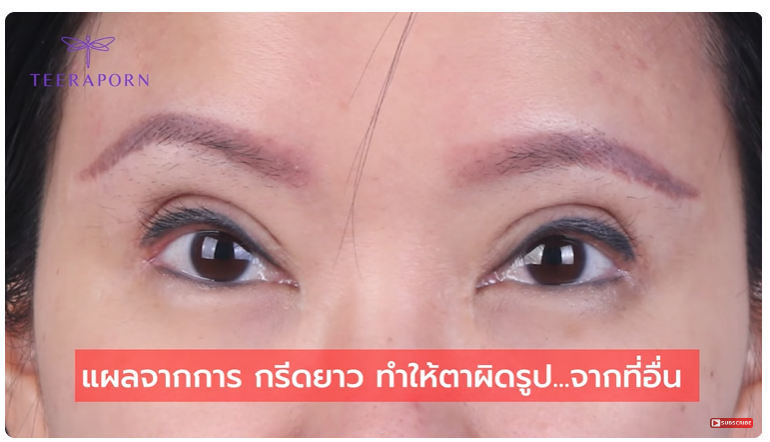
The Challenge: Why revision is harder than the first time. Corrective surgery is significantly more complex than the initial procedure because the skin and muscle structures have already been altered. The most critical factor is the presence of fibrosis (scar tissue), a variable that is difficult to control. In complex cases, many other clinics may refuse to operate due to the high risk that further intervention could actually worsen the condition.
The TRP Hospital Approach: Success requires patience. While we can correct these issues, the process cannot be rushed. In cases involving severe fibrosis, immediate surgery is often impossible; operating on tissue that is still stiff and tight will inevitably lead to poor results. Therefore, a specific "wound preparation" phase is strictly necessary before any surgery can take place. This process requires time and patience, involving the following steps:
Consult with Specialists For Free
The Revision Procedure
- Initial Therapy:
Daily care. The doctor will prescribe specific medicationmedication to be massaged daily into the scar tissue and the brow area to begin the softening process. - Dissolving Fibrosis:
Targeted injections. We administer approximately 5 to 6 injections directly into the scar area. This helps break down the dense fibrous tissue (fibrosis) anchored beneath the skin. - The Waiting Period:
Why time matters. This recovery and preparation phase cannot be rushed. It typically takes 6 to 7 months for the skin to recover, ensuring it is soft and elastic enough to safely undergo revision surgery. - Results of the Preparation Phase:Visible improvement. Even before the actual revision surgery is performed, this 6 to 7-month treatment regimen yields positive changes. The previously hard and tight scarring improves significantly:• The tissue becomes much softer.The sensation of tightness when opening the eyes disappears.• Hard keloids fade away. Raised suture marks become smooth.This transformation proves that patience pays off. Ensuring the tissue is fully prepared is a critical step that directly determines the success of the corrective surgery. [See more details in the video below].
Consult with Specialists For Free
Summary.
- Look Deeper Than Reviews: Do not judge by images alone. Avoid making decisions based solely on beautiful "after" photos. You should research the procedure comprehensively, paying close attention to the specific surgical techniques (such as short incision versus long incision), realistic expectations, and the actual recovery time involved so that you can prepare correctly.
- New Procedures vs. Revisions: They are not the same. Fixing a botched surgery is far more difficult, complex, time-consuming, and expensive than performing a surgery for the first time. Consequently, choosing the right surgeon and the most appropriate technique for your very first procedure is the most valuable and important investment you can make.
- Dealing with Complications: Patience is the only solution. If the outcome is not what you expected, rushing to find an immediate fix can often make the problem worse. The process of "wound preparation" is non-negotiable. Although it requires waiting several months, this step is essential and lies at the heart of achieving the best possible long-term result.
Content by.
Consult with Specialists For Free