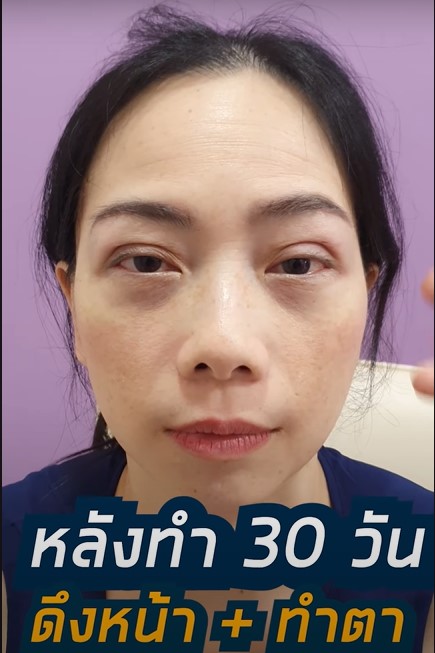
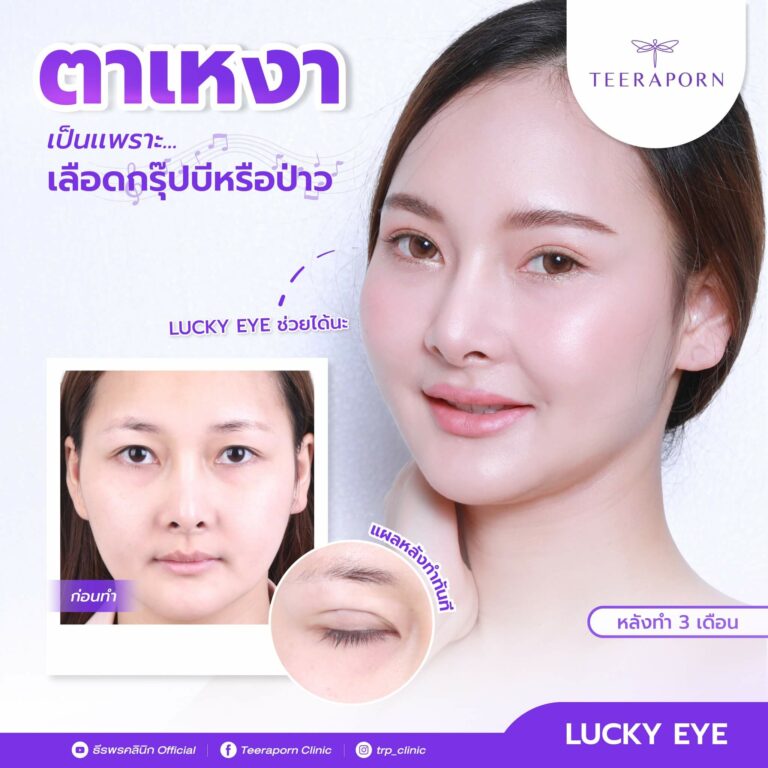
Ptosis (Weak Eyelid Muscle)

ptosis
Difficulty opening the eyes completely
Multiple or uneven eyelid creases, Asymmetrical or drooping eyelids.
These issues are resolved using Teeraporn's Eye Lock Technique.
Ptosis (Weak Eyelid Muscle)
Clickable Topics of Interest

What is Ptosis (Weak Eyelid Muscle)?

Symptoms of Ptosis

Ptosis is a condition characterized by the inability to fully open the eye. The eyelid will appear low or droopy, potentially making the eye look smaller than normal.

This symptom occurs because the eyelid muscles do not function completely, resulting in partial eye opening, which can affect one or both sides. This visible droop of the upper eyelid covers more of the eye than usual.

A severely droopy eyelid can obstruct vision and affect the overall balance of the face. Ptosis can be found in children and adults of all genders and ages.

While it can be caused by daily lifestyle habits and other factors, ptosis may also impact an individual's confidence and personal appearance. 

Symptoms of Ptosis

Ptosis, or weak eyelid muscles, can easily lead to the following symptoms:

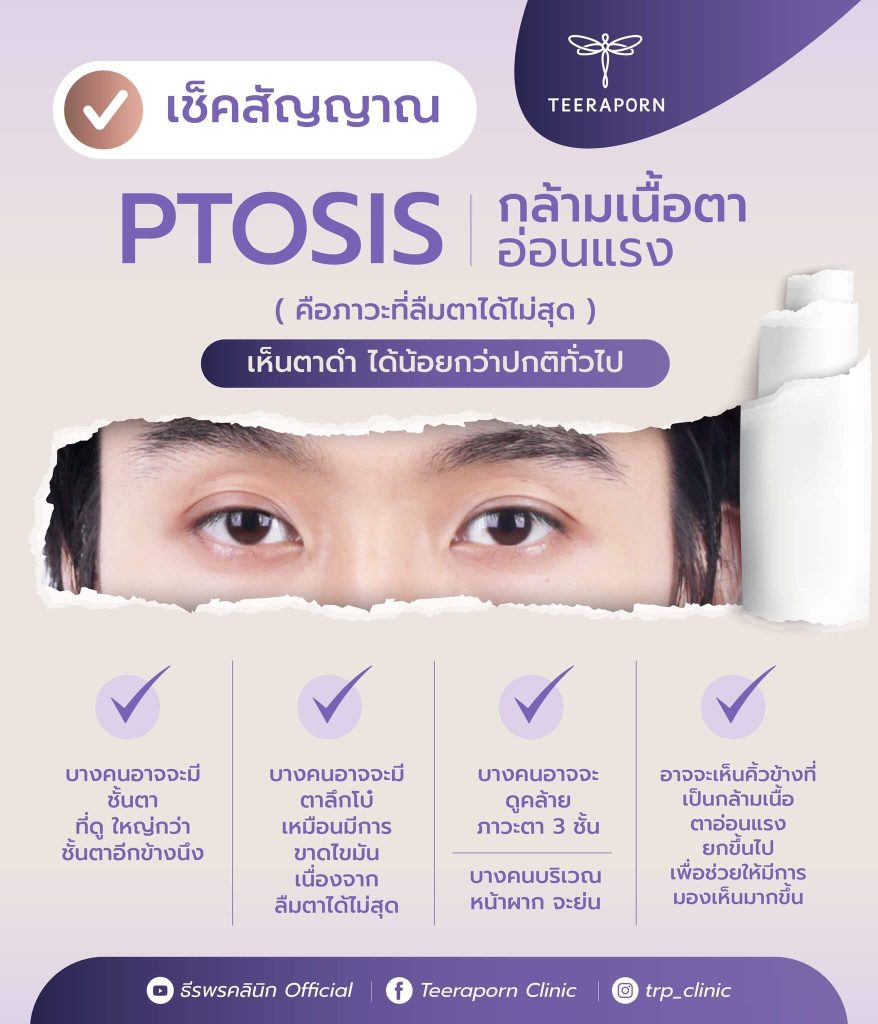
  1. Droopy Eyelids and Squinting: The eyelids appear heavy, often resulting in a tired or sleepy appearance.
  2. Incomplete Eye Opening: The eye cannot open fully, causing the dark part of the eye (iris/pupil) to be less visible than normal.
  3. Frequent Eyebrow Raising: A habitual need to raise the eyebrows, often unevenly, which can create wrinkles on the forehead on the affected side.
  4. Sunken Eyes: The eyes appear hollow or deeply set due to insufficient fat volume in the orbital area.
  5. Eyes appearing sunken or hollow due to a lack of orbital fat (volume).

Consult with Specialists For Free

Causes of Ptosis

Ptosis is caused by the weakness of the muscles specifically responsible for opening the eye. These muscles consist of two primary muscles that are layered and work in coordination to lift the eyelid: the Levator muscle and the Müller's muscle. This weakness can arise from several factors, which are listed as follows:

Congenital Ptosis is a condition where the levator muscle (the primary eyelid-raising muscle) is either underdeveloped or the ptosis is caused by hereditary factors. This results in a child being born with a drooping eyelid.

The droopy eyelid covers more of the eye than usual, leading to an incomplete opening of the eye. In cases where the muscle weakness affects only one side, the eye on that side may appear smaller or have reduced visibility compared to the other.

While the eyelid muscle itself remains present and strong, excessive and repetitive use over time causes the eyelid muscle to stretch as a person ages. 

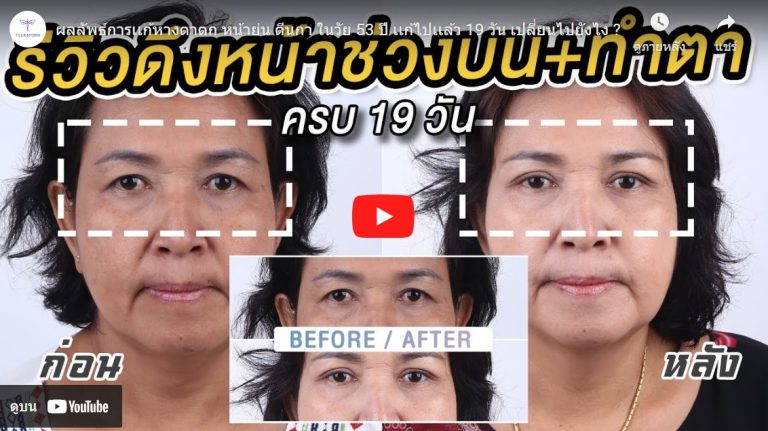
This stretching leads to sagging and drooping eyelids and a decrease in the firmness of the eyelid's main muscle. This loss of firmness may, in turn, cause a person to constantly raise their eyebrows or forehead as a compensatory action, which can ultimately lead to the development of wrinkles in those areas. 

Certain daily habits and actions can contribute to this condition: excessive screen time and Contact Lens Use: Individuals who use computers or smartphones all day, as well as those who wear contact lenses regularly, are at risk. 

Constantly rubbing the eyes or experiencing an injury/accident can cause the eyelid muscles to stretch or tear, which may lead to or worsen the ptosis condition. 

A previous failed double eyelid surgery can lead to complications. For example, if the surgical procedure impacted the eye muscles, it may subsequently result in the development of ptosis (weak eyelid muscle) later on.

Myasthenia Gravis (MG) is a disease that affects communication between the nerves and muscles, causing the muscles to work below their capacity. Alternatively, the issue may stem from poor function of the third cranial nerve, which prevents the eyelid muscle from contracting fully. Both conditions lead to an inability to fully raise the eyelid.

Tumors or masses that compress the eye area.

How to Treat Ptosis

The most crucial first step is to accurately determine whether the primary problem is muscle weakness or skin drooping, before considering various treatment options. At Teeraporn, we treat the condition using surgical double eyelid procedures with muscle adjustment. This allows the surgeon to perform a detailed diagnosis to select the precise technique that will effectively address each individual's specific problem.

Causes of Ptosis

Surgical Correction of Ptosis (Weak Eyelid Muscle)

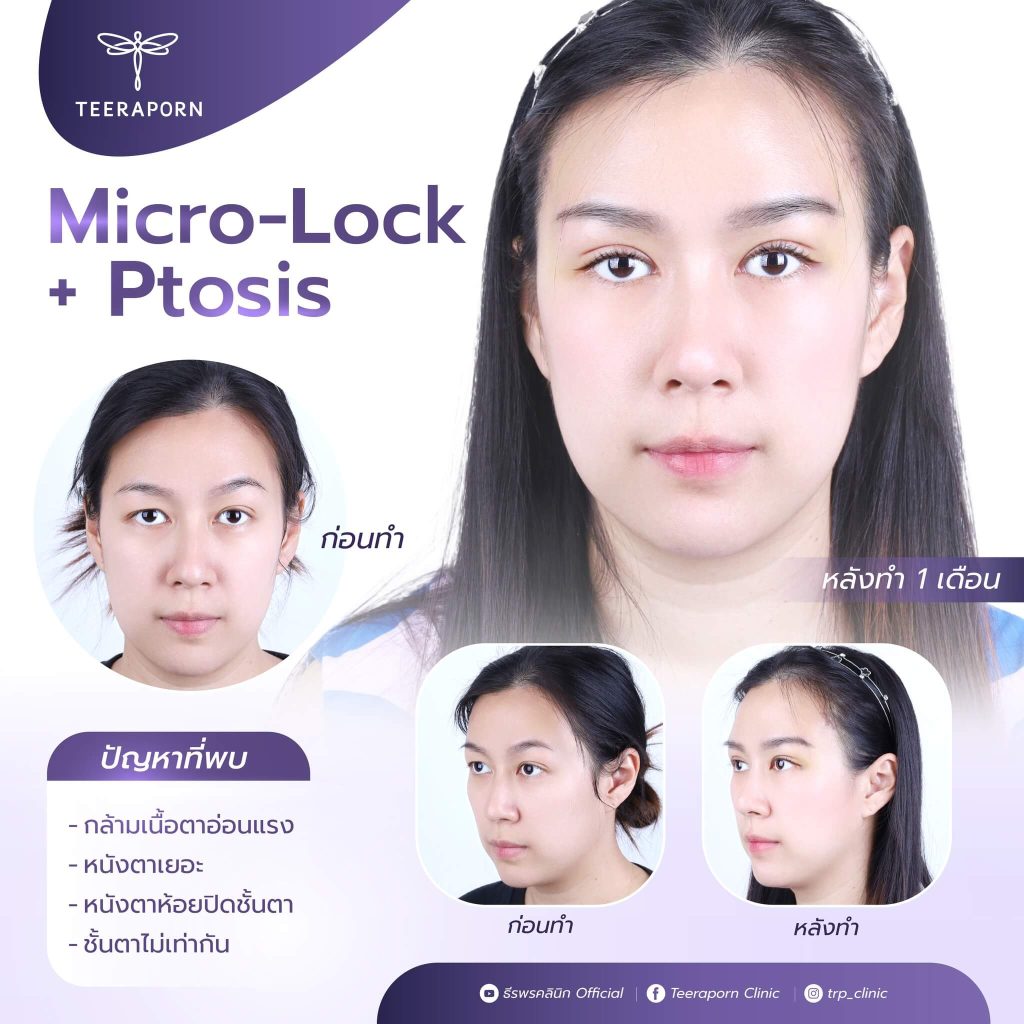
Teeraporn's surgical technique is a specialized double eyelid surgery with specific muscle adjustment. The doctors at TRP Hospital developed this advanced method to resolve ptosis by moving away from traditional long-incision surgery and adopting a technique called "Muscle Locking".

This method uses only a very small incision or sometimes just a pinpoint entry. Instead of the traditional cutting and suturing of the muscle, this new technique employs a "locking system" to directly anchor and adjust the weakened muscle layer. This advanced technique allows for the scar to be seamlessly hidden and delivers a more natural-looking result with the added benefit of no required hospital stay; patients can return home immediately after the procedure. The details of the specific locking techniques are as follows:

In this method, the incision is made on the inner surface of the eyelid. It results in minimal swelling and bruising. Crucially, no external scar is visible. The incision is closed using dissolvable sutures. This technique is specifically suited for patients with minor ptosis issues.

This technique involves an external incision with a short cut through the skin to reach and adjust the underlying eyelid muscle. The muscle is surgically corrected and positioned appropriately to create a beautiful, customized double eyelid crease.

Addressing Sunken or Hollow Eyes For patients who present with sunken or hollow eyes (enophthalmos), adding fat may be considered. This supplementary step can treat a range of conditions, from mild cases of muscle weakness to those with very significant muscle hypotonia.

This technique is appropriate for individuals with severe ptosis (weak eyelid muscle), typically cases that are congenital (present from birth). This complex procedure requires the expertise of a highly specialized surgeon and involves a longer operating time. The technique uses the forehead muscle to help lift the eyelid.

Which Surgeon is Best for Ptosis

What Makes Us Unique

  • Minimised scarring and swelling: Our specialized technique ensures the scar is concealed and difficult to see (minimizing visibility).
  • Small, precise incision for targeted correction: We address ptosis issues using the exclusive EYE-LOCK Technique to ensure maximum precision.
  • Same-day discharge for most cases: Procedures are performed by an experienced Ophthalmic Surgeon, allowing patients to return home immediately after surgery.
  • A commitment to safety for over 40 years: Our patient safety protocols are overseen by a trusted surgical team, a choice favored by celebrities and general patients for over four decades.
  • Multidisciplinary surgical expertise: Procedures are performed by a team of Facial Plastic Surgeons and Ophthalmic Surgeons (Ophthalmologists), with all standards maintained under our specialized supervision.
Picture of หมอนุ้ย

Dr. Nui

JUTIMA PATLIDANON, M.D.
License No. 35273

Get to know the Doctor

Ptosis Eye Surgery

Unilateral Ptosis
แก้ไข กล้ามเนื้อตาอ่อนแรง
Eyelid Surgery for Ptosis
Post-Procedure Care Instructions
กล้ามเนื้อตาอ่อนแรง 1
กล้ามเนื้อตาอ่อนแรง 2
  • Take the prescribed anti-inflammatory medication exactly as directed by your physician to complete the full course.
  • Elevate your head while sleeping after the surgery to help reduce swelling.
  • Avoid getting the wound wet until the sutures are removed. After suture removal, you may clean the area as normal.
  • We encourage you resume light exercise, such as walking or light jogging right away. This will help with swelling reduction
  • If there is any perspiration or dirt, simply gently dab it dry with our provided cleaning kit to prevent irritation or infection.
Post-Surgical Follow-up Schedule
  • Day 1: Medication injection and wound care.
  • Day 2: Medication injection and wound care.
  • Day 3: Injection + Dressing Change
  • Day 5: Suture removal
  • Day 14: Follow-up appointment to check healing progress and receive medication (to help minimize scarring).
  • Months 1 & 2: Follow-up appointments to monitor long-term progress.
Complimentary Post-Operative Care Services
  1. Cold Compress Application: To help alleviate swelling and bruising in the treatment area.
  2. Infrared Light Therapy: To promote faster wound drying and healing (often used to reduce inflammation).
  3. Wound Care and Medication: Complimentary wound cleaning service and injection of anti-swelling medication.
  4. Anti-Inflammatory & Scar Management Kit: Provision of medication to reduce inflammation and swelling, along with prescription ointment for scar treatment.
  5. Extended Follow-up Care: Continuous monitoring and care services for up to 1 full year (Terms and conditions apply, as specified by the hospital).

Frequently Asked Questions (FAQ)

The condition occurs because the levator muscle—the muscle responsible for lifting the eyelid—cannot function at full efficiency. This results in the eyelid only being able to open slightly, which impacts the patient's daily vision.

Correction involves deep surgical fixation at the level of the muscle. This procedure is often performed in conjunction with double eyelid surgery to help resolve the issues of a droopy, sleepy-looking eye (ptosis).

While eyelid muscle weakness (ptosis) is typically not severely dangerous, it significantly interferes with daily vision. Affected individuals frequently have to raise their eyebrows just to see, and this condition can also obstruct the visual field, limiting their view to a narrower angle.

If the patient undergoes proper and correct surgical treatment from a highly experienced physician, the eye will not droop again in the long term.

Non-Surgical Correction Methods

Explore natural methods by clicking below to read more details.

Read more

Testimonials

Summary.

It is important to note that this condition is not a serious disease, but it can significantly disrupt daily life. Patients often experience strain when looking up, have difficulty seeing clearly, and are forced to use their foreheads to assist with opening their eyes.

Precise surgical correction helps restore the eye to its ideal appearance, enabling the patient to see better. Furthermore, it serves to enhance the patient's self-esteem and confidence.

Choosing a hospital or clinic, along with a highly specialized surgeon, is crucial. This decision will help ensure that the problem is resolved and the patient receives the most suitable, targeted correction for the best possible outcome.

Content by.

Picture of หมอชลธิศ

Dr. Choladhis

CHOLADHIS SINRACHTANANT, M.D.
License No. 5863

Get to know the Doctor
Picture of หมอนุ้ย

Dr. Nui

JUTIMA PATLIDANON, M.D.
License No. 35273

Get to know the Doctor

Pricing

Full Service Treatment.

One-time payment, All included, no additional charges.

The service fee is only...

face

  • Micro Lock 160,000
  • Upper face lock 210,000
  • Lower face lock 310,000
  • 2-stage facelift 420,000
  • forehead lock 210,000
  • Facial fat injection per specific area 80,000
  • Fat grafting 160,000

eye

  • Upper Blepharoplasty (Double Eyelid) 55,000
  • Eye Bags 80,000
  • Ptosis (Weak Eyelid Muscle) 100,000

Eyebrow

  • Sub-Brow Lift 80,000
  • Brow Lift 80,000

nose

  • Rhinoplasty 75,000
  • Revision Rhinoplasty 95,000

Mouth

  • Upper lip lift 75,000

Neck

  • Chin liposuction 160,000
  • Neck Lift (Platysmaplasty) 210,000

For more pricing information, please click the button below.

Related Ariticles

กล้ามเนื้อตาอ่อนแรง 12
Team of Teeraporn's Doctor
Consult with our Specialist For Free.

เราใช้คุกกี้เพื่อพัฒนาประสิทธิภาพ และประสบการณ์ที่ดีในการใช้เว็บไซต์ของคุณ คุณสามารถศึกษารายละเอียดได้ที่ นโยบายความเป็นส่วนตัว และสามารถจัดการความเป็นส่วนตัวเองได้ของคุณได้เองโดยคลิกที่ ตั้งค่า

Privacy Preferences

คุณสามารถเลือกการตั้งค่าคุกกี้โดยเปิด/ปิด คุกกี้ในแต่ละประเภทได้ตามความต้องการ ยกเว้น คุกกี้ที่จำเป็น


Allow All
Manage Consent Preferences
  • Always Active

Save